
Article
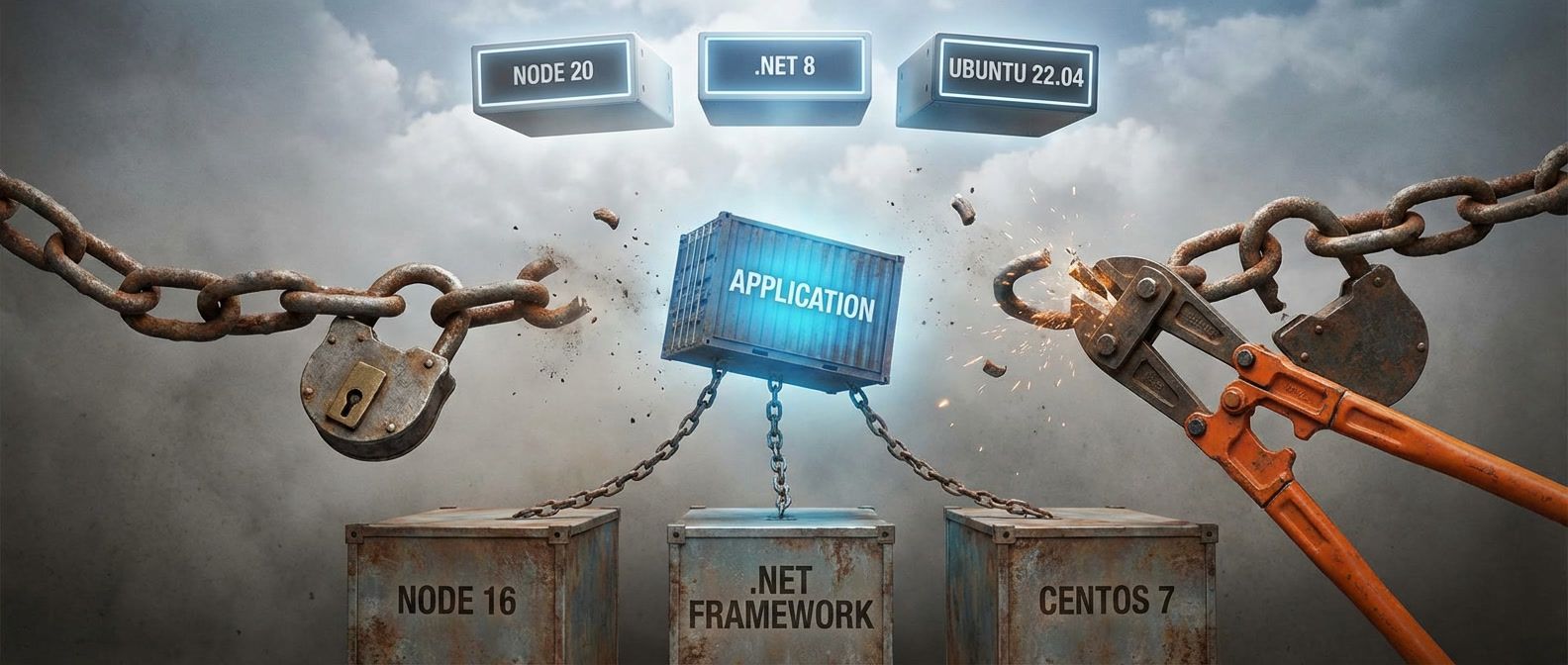
Dependency Hell: Upgrading EOL Runtimes
Strategies for escaping end-of-life .NET Framework, old Node, and legacy Linux distributions.
Learn more

Enterprise runtime for cloud-native services, internal APIs, and DevOps automation
.NET and C# dominate enterprise backend development, and that makes them unavoidable in platform engineering. Many of the internal services that platform teams build on top of—identity providers, API gateways, legacy monoliths being decomposed into microservices—run on .NET. Understanding the runtime, its deployment model, and its operational characteristics is essential for building platforms that serve .NET application teams well.
From a platform engineering perspective, .NET’s strengths include first-class Azure integration, mature observability through OpenTelemetry’s .NET SDK, and a container story that has improved dramatically with minimal APIs and AOT compilation. Health check endpoints, structured logging with Serilog or the built-in logging abstractions, and gRPC support are all part of the standard toolkit. Platform teams can publish opinionated project templates via dotnet new that enforce organizational standards from the first commit.
The DevOps angle matters too. .NET builds are resource-intensive compared to Go or Python, so CI pipeline optimization—NuGet caching, incremental builds, and parallelized test execution—directly affects developer feedback loops. Understanding MSBuild, solution structure, and the NuGet dependency graph helps platform engineers design build systems that scale across hundreds of repositories without becoming a bottleneck.
Strategies for escaping end-of-life .NET Framework, old Node, and legacy Linux distributions.

Sampling strategies that give you tracing value without the cost and noise of tracing every request.

Consumer-driven contracts that catch breaking changes without heavyweight tooling or coordination overhead.

DLQ design that makes failed messages debuggable and reprocessable instead of a graveyard.

Techniques for getting a test harness around code that was never designed for testability.