
Alert Fatigue: Symptom-Based Alerting That Works
Free Download
Get the ebook instantly. Review the outline, enter your work email, and open the download in one step.
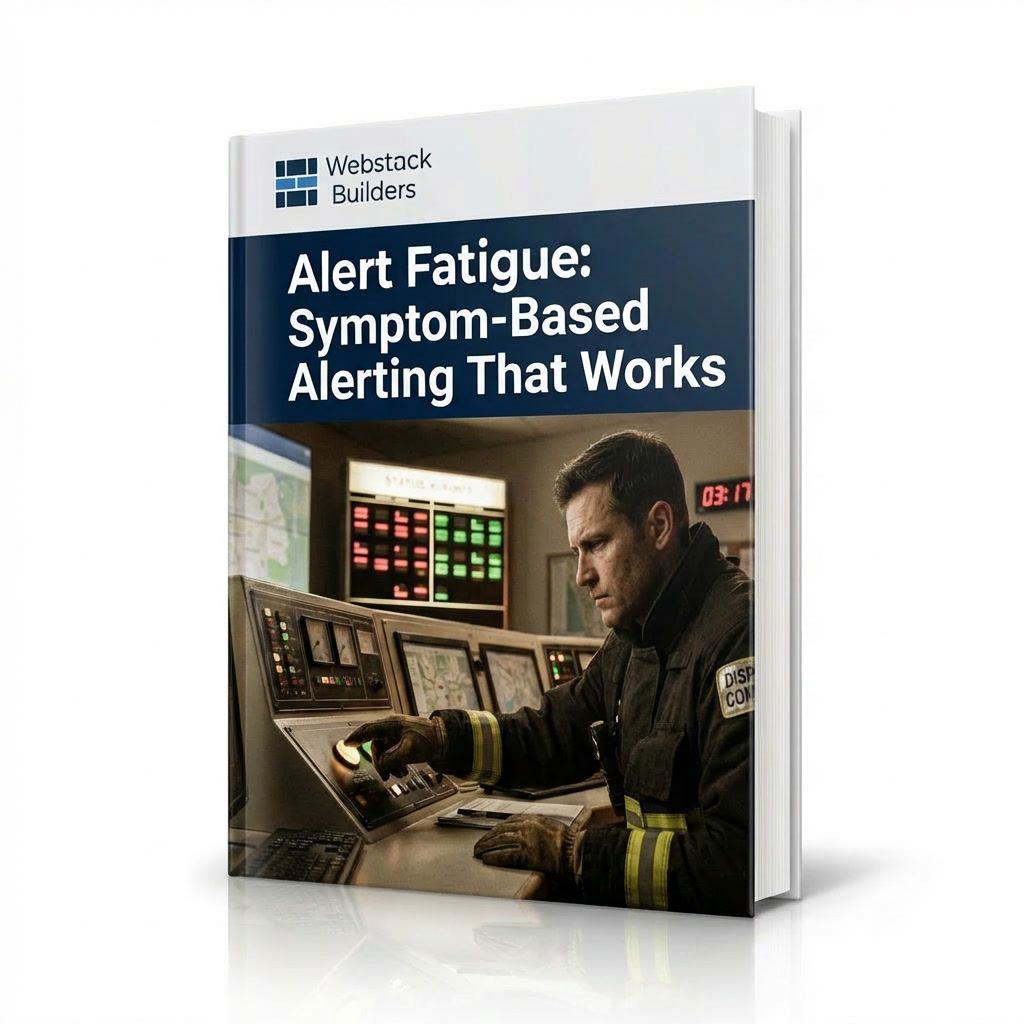
Designing alerts that wake people up for real problems and include runbooks for resolution.
- File type
- PDF Download
- Pages
- 19 pages
- File size
- 0.9 MB
Your on-call engineer gets paged at 2 AM for high CPU, investigates for 20 minutes, finds nothing wrong, and learns to ignore the pager. By the time a real incident fires — elevated API error rates — they’ve been trained by false alarms to assume it’s another false positive. When everything alerts, nothing alerts. The alerting system becomes noise that hides real incidents.
This complete guide teaches you:
- Distinguishing symptoms (actual user impact) from causes (potential problems) in alert design
- SLO-derived burn rate alerting to page on error budget exhaustion, not absolute metrics
- Multi-window alerting strategies to reduce false positives while catching real incidents
- Golden signals framework (latency, traffic, errors, saturation) for alert candidate selection
- Runbook design that enables on-call engineers to respond confidently and quickly
- Alert hygiene practices: retirement, deduplication, and reducing actionable rate metrics
- Absence alerts to detect when monitoring itself fails or goes stale
Download Your Alert Fatigue Guide now to build alerts that teams actually trust.
Instant Access
Get The Ebook
Fill out the form below to receive your pdf instantly.