
SLIs, SLOs, and Error Budgets: A Practical Guide
Free Download
Get the ebook instantly. Review the outline, enter your work email, and open the download in one step.
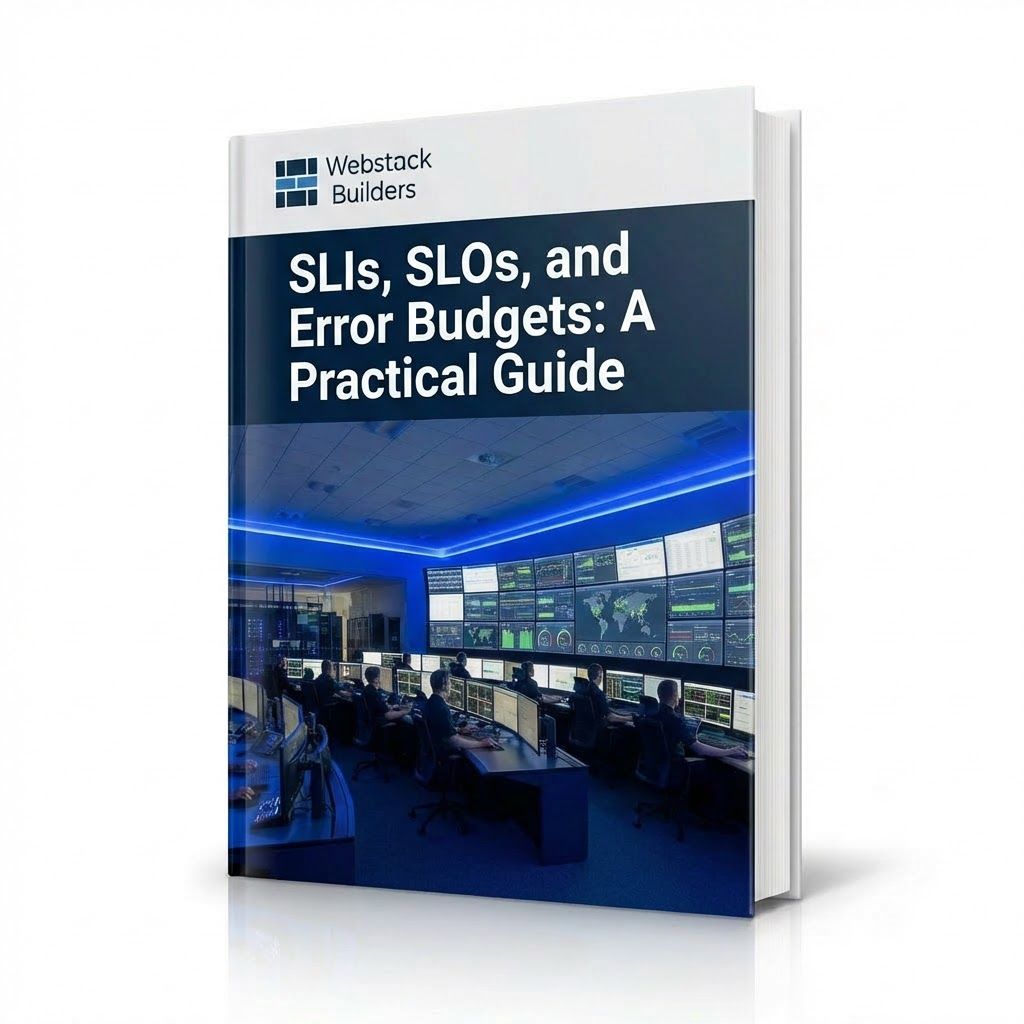
From choosing user-centric metrics to negotiating reliability tradeoffs with stakeholders — the complete framework for service level management.
- File type
- PDF Download
- Pages
- 20 pages
- File size
- 1.0 MB
Engineering teams want to ship faster. Operations teams want stability. Without a shared framework, every deployment becomes a political negotiation. SLOs transform that into math: instead of “is this change safe enough?” the question becomes “do we have budget to spend on this risk?” The answer is a number, not an opinion. SLIs measure what matters to users, SLOs set targets for those measurements, and error budgets convert the gap between 100% and your target into a spendable resource. When you have budget, spend it on velocity. When depleted, invest in reliability. This framework replaces opinions with data.
100% reliability is neither achievable nor desirable — every additional nine costs exponentially more while providing diminishing returns.
This complete guide teaches you:
- Service Level Indicators: choosing user-centric metrics that correlate with experience
- Service Level Objectives: setting targets that balance reliability and velocity
- Error budgets: converting SLOs into spendable deployment allowance
- SLI anti-patterns: metrics that stay green while users suffer
- Negotiating with stakeholders: translating reliability into business language
- Incident response and SLO impacts: postmortems that drive reliability investment
- Error budget burn: detection and response to rapid budget consumption
Download Your SLO and Error Budget Guide now to align reliability with business velocity.
Instant Access
Get The Ebook
Fill out the form below to receive your pdf instantly.