
Documenting Undocumented Systems
Free Download
Get the ebook instantly. Review the outline, enter your work email, and open the download in one step.
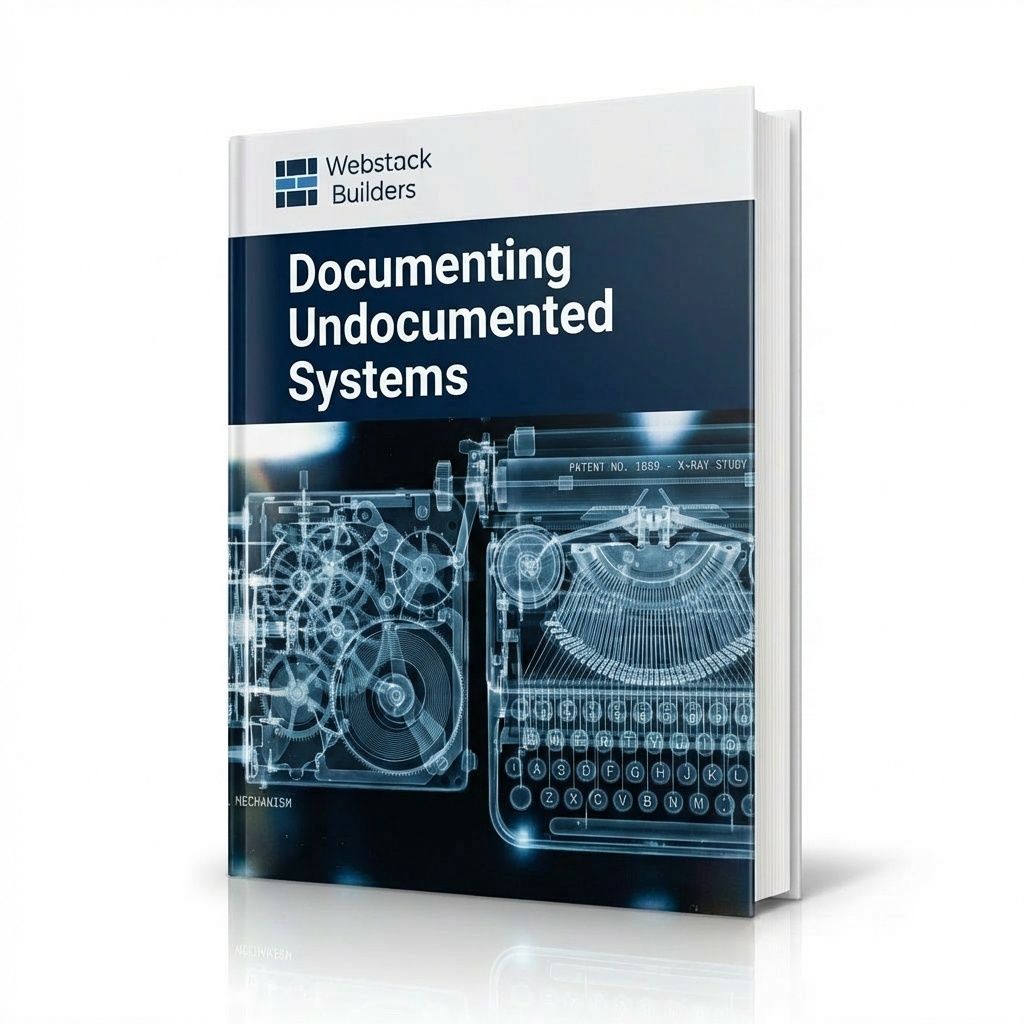
Reverse-engineering architecture from running code when documentation is missing or wrong.
- File type
- PDF Download
- Pages
- 32 pages
- File size
- 1.6 MB
You’ve inherited a system with a README last updated three years ago, architecture diagrams referencing deleted services, and an API spec describing 60% of actual endpoints. Every long-lived system follows the same trajectory: accurate documentation at launch, gradual drift as changes accumulate, and eventually a state where documentation is worse than useless. By year three, architecture has drifted so far that diagrams show services that were deprecated 18 months ago. By year five, documentation becomes actively misleading, causing new team members to form incorrect mental models that take months to unlearn.
The approach isn’t documenting everything from scratch — it’s systematically extracting knowledge from the running system and codebase.
This complete guide teaches you:
- Documentation decay lifecycle: tracking accuracy over time
- Categories of documentation debt: missing, outdated, wrong, and tribal knowledge
- Code archaeology: static analysis, git history, and business logic extraction
- Runtime observation: tracing execution paths and discovering undocumented features
- Testing as documentation: executable specifications that stay current
- ADRs and architecture decisions: capturing the why behind technical choices
- Building sustainable documentation practices: ownership and verification
Download Your Legacy System Documentation Guide now to reverse-engineer architecture from code when docs fail.
Instant Access
Get The Ebook
Fill out the form below to receive your pdf instantly.