
On-Call for Small Teams: Surviving With Three
Free Download
Get the ebook instantly. Review the outline, enter your work email, and open the download in one step.
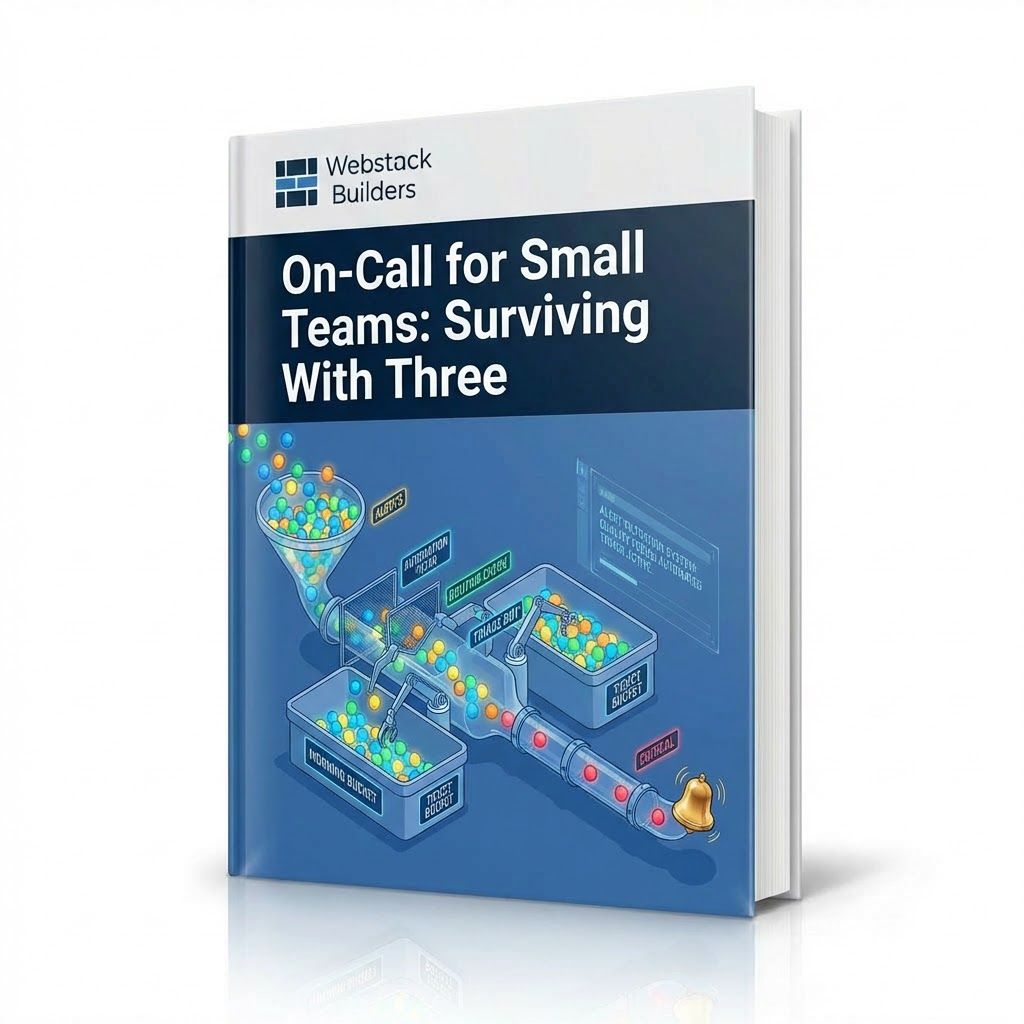
Sustainable rotations, escalation policies, and alert quality for teams too small for 24/7 coverage.
- File type
- PDF Download
- Pages
- 17 pages
- File size
- 1.1 MB
Large organizations spread on-call across dozens of engineers with follow-the-sun coverage and dedicated incident commanders. A three-person team has none of that. One person on call for a week means one-third of the team is degraded. A team copying enterprise on-call from their previous company saw all three burned out within two months: one person got 47 pages in a single week, mostly transient issues that resolved themselves. After rebuilding with daily rotations, aggressive alert suppression, and no non-critical pages outside business hours, pages dropped to 2-3 per week and the team started sleeping again.
Small team on-call requires ruthless prioritization: not everything is a 3 AM problem.
This complete guide teaches you:
- Rotation design: weekly vs. daily vs. business-hours-only tradeoffs
- Coverage gaps: handling vacations, illness, and absences without burning out remaining team
- Alert severity levels: P1 through P4 and their page policies
- Signal-to-noise ratio: measuring alert quality and eliminating noise
- On-call runbooks and escalation: knowing when to involve the team
- Incident response for small teams: documentation over tribal knowledge
- Compensation and burnout prevention: time-off policies and sustainable coverage
- Monitoring handoffs and context loss across rotation boundaries
Download Your Small Team On-Call Playbook now to build sustainable coverage that doesn’t burn out your team.
Instant Access
Get The Ebook
Fill out the form below to receive your pdf instantly.