
Download Your Internal CLI Design Guide
Free Download
Get the ebook instantly. Review the outline, enter your work email, and open the download in one step.
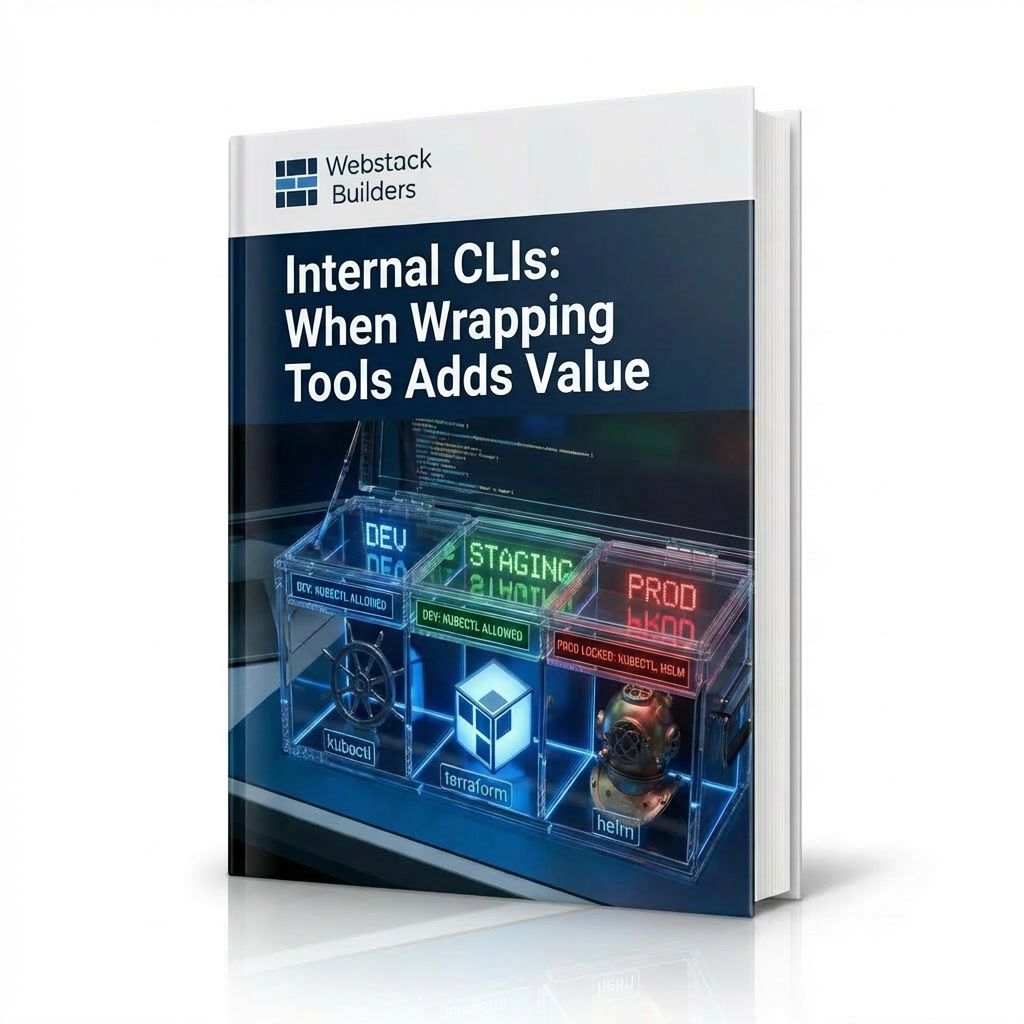
Get the e-book: When to build abstractions over kubectl or terraform and when the wrapper creates more problems than it solves.
- File type
- Whitepaper Download
- Pages
- 24 pages
- File size
- 2.3 MB
A platform team builds deploy-cli wrapping kubectl and helm. Initially simpler — developers type one command instead of twelve steps. Then Kubernetes releases features. Helm changes flags. The CLI needs updates. The original author left. Developers hit cryptic errors and start bypassing it. Within a year, the wrapper is abandonware that everyone works around but nobody removes. The bar for building a wrapper should be high. Every abstraction layer is a maintenance commitment. If the underlying tool’s UX is acceptable with good documentation, don’t wrap it — improve the docs instead.
This complete guide teaches you when wrappers add value and how to design them for maintainability.
Read this e-book to understand:
- When wrappers add value: complexity hiding, guard rails, context injection, credential management, audit logging
- Decision framework: evaluating whether a wrapper is worth 3+ years of maintenance commitment
- The transparent wrapper pattern: composing underlying tools without hiding what's happening
- Passthrough architectures: letting developers use unfamiliar flags without wrapper updates
- Deprecation and migration: recognizing when wrappers become liabilities and planning graceful exits
- Maintenance hygiene: tracking upstream releases, testing against new versions, and keeping docs current
- Anti-patterns: hardcoded defaults, reimplementation, and security theater
Download Your Internal CLI Design Guide now to build wrappers that improve developer experience instead of becoming maintenance burdens.
Instant Access
Get The Ebook
Fill out the form below to receive your whitepaper instantly.